I realize that the tone of my last few posts has been pretty grouchy, and I'll more than willingly admit that the previous one wasn't my best and only served to enforce that image. A figurative tidal wave of Jell-O was descending upon me, and ignoring it would have seen me swallowed up never to emerge, while only making a modest effort to prepare for it would leave bits of gelatin all over the floor for me to grind into the carpet at a later date. Basically what I'm saying is I was busy and this week I've had time to actually plan out this blog post rather than hammer on a keyboard for ten minutes and call it a day. This week I want to talk about something I really like for a change rather than harp on about the next thing about the industry that makes me mad.
Like David Cage.
I've noticed that I talk an awful lot about survival horror games like Silent Hill 2 and Resident Evil, and the reason for that is simple; having only just gotten interested in the genre, I'm discovering new and interesting things about it that make it unlike any other kind of game I've played before. You see, when I played Resident Evil for the first time, I ended up in a situation where my regular storeroom and save point became less accessible after a door got stuck and I didn't want to waste ammo killing the zombie in the room. It was then that I did something very unusual: I thought about how to play the game after I'd put down the controller for the day. It's not unusual to want to play more of a game to see where it goes or think about playing the game later, but Resident Evil made me think about how I was going to play the game the next time I turned fired my Gamecube up.
The next time I found myself doing this was with 999: Nine Hours, Nine Persons, Nine Doors. It's a visual novel with a well-written plot that has more twists and turns than a warehouse full of spare plumbing parts. The character in 999 all have numbers assigned to them that prevent them from entering certain areas (it's a lot more complex than that), and when one character suddenly died, I did what I could to figure out who could have done the deed by comparing and working with these numbers. It was a futile effort because of plot shenanigans, but again, I actively took part in the game when I wasn't playing it.
What I'm getting at is that games that involve the player in an act outside of playing the game are more likely to leave a greater impression. A really direct example would be Metal Gear Solid, which features a sequence where the player character encounters a psychokinetic boss demonstrates his abilities by reading your mind (the other games on your memory card and tracking your in-game stats), moves matter with his mind (makes the player's controller rumble) and finally disrupts the player's movements. The only way to beat him is to move the controller to the system's second controller port.
I'm not even playing the game and he's reading me like a book!
There's been a lot of interest in augmented reality games recently, what
with AR cards being included with Nintendo 3DS systems that take
pictures like a camera and overlay them in gameplay. I suppose a point that I'm trying to dredge together out of all of this is that augmented reality games don't have to center around taking pictures or all that. Developers should feel free to go ahead though, my friends and I had a blast blowing each others faces up when the first of us got a 3DS. I think that "AR" is at its strongest when it supplements gameplay or maybe doesn't actually augment reality.
A further point I've though of after meditating on inviting the player to play the game when they're not is that it's extremely difficult to do intentionally. Sure, you can go the Metal Gear Solid route, but while it's memorable, it doesn't particularly add to the game's plot or gameplay in the same way that 999 and Resident Evil did. If a developer's goal is to make consumers want to continue playing their games, wouldn't hooking them in this manner be the optimal solution? Let's see more of this in the future, games industry!
In my post about adventure games I concluded by talking about how adventure games should attempt to reinvent themselves in order to appeal more broadly. Looking back I feel kind of silly, given that this is a negative direction I think the industry is taking. I understand that attempting to make a single game appeal to as large a crowd as possible makes sense from a business standpoint, but those who haven't been to interested in games for a long time have to realize that games themselves are a niche interest.
Which is a shame because not everybody is patient enough to get context for this scene.
So many recent games like Dead Space have been claimed to be able to appeal to a broader audience. What this means is that Dead Space changed from a survival horror game to a game with an emphasis on combat rather than horror. As a result the horror genre is feeling severely undercut. About the only "Triple A" horror games that have come out recently are Silent Hill: Downpour and Resident Evil 6, the former of which trips over the horror aspect of the genre and the latter having long since cast its bet in with action and shooting rather than legitimate horror.
By watering down these genres and muddling them together, you get problems like Assassin's Creed 3 had, that there really is no core gameplay mechanic for the game to focus on. If your game can't focus on doing one thing really well then it's going to bland, forgettable, and probably really bad.
Yet more and more Triple A games seem to be doing this. I won't lump all of them together, but the bulk of them seem top be designed to appeal to everybody with thinly spread mechanics from across the spectrum of genres. Games and movies have never been closer together; churn out a game that will be bought on brand recognition and people will be guaranteed to buy it while going down a checklist of stuff that needs to appear in everything or else it won't appeal to a broad audience, with absurdly large budgets to boot. The recent Bioshock Infinite clocked in at an indefinite amount estimated to be more than $100,000,000 but less than $200,000000 according to developers. Bioshock Infinite is incredibly solid from nearly every source I've questioned, so hopefully change is in the winds.
Games are looking better than ever, but how much money is being spent on just looks nowadays?
It's cool that companies want to appeal to a larger audience, but they should do it by making games that fit into specific niches rather than blending elements of the genres together. It seems like the only companies willing to take risks and throw their lot in with a definite audience in mind are the ones that make indie games. Machinarium - in my opinion the king of video games - had an incredibly modest budget, with only $1000 spent on marketing. The game was sold at very reasonable prices on distribution platforms like Steam and PSN which allowed the company to turn a profit. Indie games have a much more sustainable business model in the current industry, which has seen the loss of prolific studios like THQ and LucasArts.
THQ is known for game series such as Saints Row, Red Faction, and Dawn of War.
The point I'm trying to make is this; Indie games with lesser budgets don't need excessive sales to turn a profit, and by focusing tightly on a specific genre, indie games like Amnesia: The Dark Descent can capture all of a niche audience. At the moments big name games are incorporating elements from lots of genres to appeal to as many people as possible, but more often than not it comes off as spreading everything too thinly to really grab hold of any audience. As a result, sales decline, which is affecting the industry negatively by forcing budget cuts and bankruptcy of competent studios. Something's gotta give. I agree with the current forecast for the industry: a crash.
I know what you're thinking. You're thinking that I'm going to talk about two of the biggest recent "things" in gaming right now; Square Enix's money problems or the statement by Irrational Game's Ken Levine that having female characters on the front of a game's boxart doesn't sell after a female central character in Bioshock Infinite was relegated back of the box. Jim Sterling's weekly video show The Jimquisition covered the latter more eloquently than I could hope to, and just did a bit on the instability of the game industry as it is, so what I'm going to talk about this week is Ducktales.
Ducktales was an early example of how to license an existing property and make it into a great game. Capcom was the go-to company for adapting Disney licenses into games, and pretty much all of them are bang-up jobs. In particular, Goof Troop for the SNES was the first game designed by Shinji Mikami, the big brain behind Resident Evil; one can even see the parallels between the game's single-item inventory slot and the limited carrying capacity in RE.
Speaking of Resident Evil, the Gamecube Remake of Resident Evil is - in my opinion - the golden standard for game remakes. Released in 2002, it was the start of an exclusivity agreement between Capcom and Nintendo to give the Gamecube a line of games to appeal to mature gamers. Given Nintendo's traditional "family friendly" background, Capcom pulled out all the stops, giving the games tons of new content, like new areas, new mechanics that change how the game is played, redone music and sound effects, an attempt to make the storyline more coherent, and gave it graphics that for their time were incredible. Nintendo had a modest hit that secured future releases like Resident Evil 4 and other games that weren't Resident Evil 4.
It's generally agreed that RE4 is the magnum opus of the series.
Since then, Capcom has rereleased several of their older titles, and long-running series like Mega Man were compiled onto one game disc and sold as collections. While it's cool that they're releasing all of these classics for future generations to enjoy, I'm concerned that not enough of these future remakes will have new content. The Ducktales remake promises to have voices provided by Disney's cast (I found a particularly heartwarming article about how the 94-year old voice actor for Scrooge McDuck breezed through the recording session), a more-fleshed out story and updated graphics. However, arcade games like Final Fight see ports onto newer consoles with little to no new content.
Here's the kicker; this is a safe trend for the industry. Capcom has seen botched launches of big-name titles such as DmC and Street Fighter X Tekken; the former was a reboot of a franchise that had run low on ideas and the latter a team up from two well-known names in fighting games. Both of these games failed to live up to sale expectations, so I feel that Capcom is "retreating" into safe territory with remakes of older titles after being scared away by trying something new with their reliable franchises. What this means is that it will be difficult to see fresh new content from Capcom in the near future.
I understand the need to play it safe after lackluster sales, but Capcom has made this a running trend. If Ducktales Remastered sells well (which I really don't doubt) then it will encourage more HD remasters of other titles. I'm fine with that, but the industry has had one fiasco after the other, and I want something that will give me confidence that the industry is headed in a bright new direction rather than wallowing its past successes.
Interestingly, I've been mulling over which direction to take this week's blog post; my first idea was to recant a statement I made last week about adventure games needing to appeal to a wider audience. Game initially started as a niche appeal, and by attempting to broaden the appeal of a particular genre too much will spread that genre's appeal too thin to for any audience to enjoy. Then information about the new XBox and the resignation of Electronic Art's CEO came to light, so I figured why not talk about the state of the industry? Perhaps my previous idea will come to fruition in the near future.
This information about the XBox came from an article on media news site The Escapist. Previous articles about the XBox detailed that it would be available in different versions to suit the tastes of "casual" and "hardcore" audiences, and hints have been dropped on multiple occasions that Microsoft's new console would implement features to prevent used games from being played. A recent article makes no mention of this, but it does detail how the new XBox (named "Durango") will not support play from game discs; instead, games must be installed to the hard drive before they can be played.
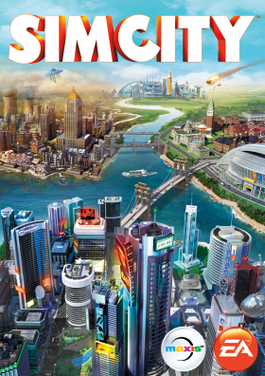
Putting aside the installation issue - for which there will be fixes, reportedly - the leak mentions that the console always has to be online. Putting aside for a moment the issue of not everybody has internet, there's the issue of the recent SimCity debacle on the side of EA. For those not familiar, Electronic Art's recent game SimCity forced the player to always be connected to the internet, even for single-player games. Why this is bad is because you are always at the mercy of the company whose servers your game runs on; if the company's servers go down, you can't play your game. The big problem with SimCity was that EA's servers couldn't handle the sheer volume of players logging on to play on the first day, resulting in people being unable to play because of EA's problem.
The icing on the cake is when modders removed two lines of code and could play the game perfectly fine offline, despite being told over and over that being online was a necessity because of the sheer enormity of SimCity's worlds. It's damning evidence that EA just wanted the game to always be online so they could enforce their Digital Rights Management policies.
I know I just got done talking about Valve and their digital distribution platform Steam a few posts ago, but I really cannot emphasize how well they know both their customers and those who pirate. Rather than tightening the leash by imposing a laundry list of DRM, Valve opened its doors to pirates and made buying games a quick procedure that ends when you download the game. They won't stick around with fingers in your wallet, and you don't have to worry about them looming over you deprive you of time spent playing a game because their servers are down.
There's an incredibly sharp contrast between EA and Valve in the aspect of respect. Valve respects its potential pirates' methods, and as a result attempts to make a system to better accommodate them. EA's handling of SimCity and Microsoft's always online/rumored anti-used game policy won't make the customer want to buy their products because of how manipulative the whole process feels. Given the current economy, these models simply are not sustainable for the game industry. Industry commentators are predicting the console gaming market to crash, and honestly, I can see it happening given Microsoft's and EA's flagrant disrespect for their consumers.
The bottom line is that considering the enormous amounts of money that EA and Microsoft put into their franchises - Halo 4 is the most expensive video game made to date, weighing in with a budget of over $100 billion - One has to imagine what Microsoft and EA will do when their practices alienate faithful and potential customers alike in the future. Consistently working making games with these prices on a foundation of shaky business tactics simply won't pan out in the future, and the weight is on the developers' shoulders to make things work out.
I consider myself a fan of the Zelda franchise. I'd consider myself a bigger fan of the Metroid franchise, but why limit myself to just taking about intellectual property? I'll say that I'm a fan of the adventure genre of game. Adventure is sometimes used as a Swiss Army knife of genre definitions, being used to apply to lots of games even if they don't really capture the feel of an adventure. When I think of an adventure game, I think of exploring an unusual world, surprised at the unique and sometimes bizarre creatures and tools that I find, and overall having this sense of discovery of something new and grand beyond this world.
However, all is not well on adventure island, the land of the new and unknown. While games like Super Metroid and may have been a new and breathtaking experience at the time, the most recent poster boy for the Adventure genre, Legend of Zelda: Skyward Sword was received only lukewarmly by critics. What I'd like to talk about this week is Nintendo's recently stated objective for the the next Zelda game being to bring back the feeling of adventure from the early entries in the series. However, the real problem is that whenever the player is struggling, they can always jump on the internet and sort out problems by looking up an FAQ. If I compare it to spoilers for a book or movie, then one can see how it drains away the defining aspects of the medium.
Before I ask "How can game designers reincorporate a sense of adventure into a culture that can easily find out how to solve their problems with no effort?" it may help to look back on how games accomplished this in the past: the original Legend of Zelda left a handful of clues lying around on how to find otherwise ridiculously well-hidden secrets, such as taking a certain path in a looping section of the map, or blowing up normal-looking walls. Castlevania II: Simon's Quest gave even fewer clues and had non-player characters (NPC's) give cryptic hints or even outright lie to the player. The problem with these games was that their tactics worked a little TOO well; if you've never played Simon's Quest before, I dare you to finish it without an FAQ or hints.
You probably won't beat Simon's Quest, but you'll remember this phrase for the rest of your life!
What's interesting is after the release of Skyward Sword, an essay called Saving Zelda became fairly widespread, explaining the fundamental differences between the fun in Zelda games of the past and today. While I don't agree with everything (such as the suggestion that adding cracks to walls to make it more apparent what is and isn't a waste of time and energy attempting to break) but it raises some very good points, especially on the idea that newer Zelda games are too easy. The N64 Zelda games, Ocarina of Time and Majora's Mask, eased back on being so vague and toned down the difficulty as well. What resulted were battles and puzzles that - in my opinion - were too easy to accomplish and lots of your adventure being laid out for you. How can you discover new and unusual things if you're being carted around like you're on a train track?
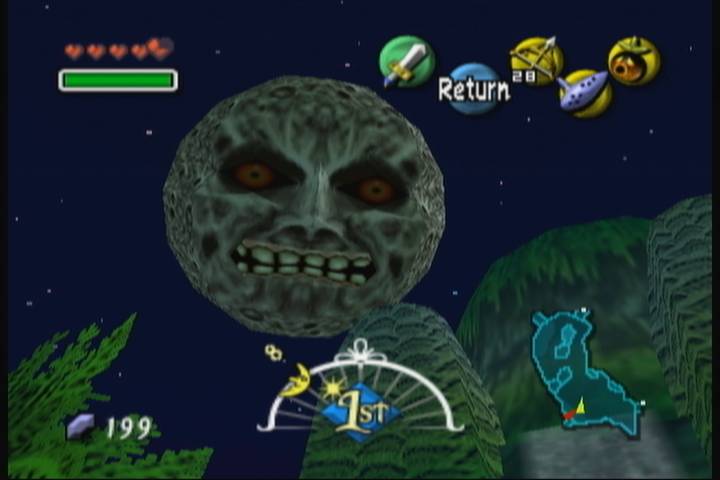
However! Majora's Mask is easily my favorite Zelda game because the bulk of the adventure was focused on in the sidequests, most of which revolved around ordinary people. The main strength of Majora's Mask was its unusual world and surreal, downbeat atmosphere. If you're not familiar with the plot, it centers around Link's adventures in an parallel world called Termina that will be destroyed within three days by the falling moon. This atmosphere of inevitable doom that hung over the entire game - literally, as the moon can be seen inching closer as the game's plot progresses - made even the mundane more interesting and exciting while simultaneously building a world with its own cultures. Atmosphere can really make or break a game; look no further than survival-horror siblings Silent Hill 2 and Silent Hill: Downpour respectively.
This harbinger of the apocalypse can be seen from any outdoor location in Majora's Mask.
Incidentally, I consider survival-horror games to be an adventure in and of themselves. Even if I know what to do in a game like Resident Evil, it's overcoming the fear what lies beyond that feels truly rewarding to the player. From my own personal experience I can say that one level in the Gamecube remake of Resident Evil (known affectionately as REmake) had such a depressing and sinister atmosphere that I had to retreat to the save room just to keep calm. Rewarding a player by playing by the rules of the game is how an adventure game should work.
More recently, the emergence of "hardcore" role-playing games such as Demon's Souls and Dark Souls have emerged, whose mystery and adventure is shown through the difficulty. The real challenge isn't finding clues and studying maps, it's in beating powerful monsters to be able to advance to the next area, which diminishes the effectiveness of an FAQ somewhat. The difficulty makes it so getting to future areas may take a while, which allows tension for what the player may face in the future build. Youtube content creator The Gaming Brit sums it up in a brilliant video where - not directly, I merely interpreted it this way - he compares the difficulty of a game to being a metaphor for the sense of discovery necessary in an adventure.
Neither of these takes on re-establishing adventure into our games are without their flaws, though. With Majora's Mask the game is still too easy - again, in my opinion - and merciless difficulty in a game like Dark Souls will turn off all but the most dedicated and hardcore of players. If one wants to win over a large playerbase, then soul-crushing difficulty is a less than savory option.
The adventure genre was one of the go-to genres before the rising popularity of shooters. While it's by no means a dead genre, adventuring is in a tedious state. What's important from here on is focusing on making the mechanics simple yet deep without holding onto the player's hand too much, like in Skyward Sword. Straying too deep into the waters of high difficulty will alienate players. It's a matter of balance.

 Posts